
Microsoft Dynamics 365 Business Central Integration with Modular Solutions
In today’s insurance industry, financial accuracy and operational efficiency are non-negotiable. Managing policies, claims, and supplier payments requires accounting tools that can keep pace with complex workflows. Microsoft Dynamics 365 Business Central is a leading cloud-based business management solution trusted by small and mid-sized organizations worldwide, bringing finance and more into a single platform that scales as the business grows.
When integrated with Modular Solutions through our Solutions Exchange, Business Central acts as an accounting bridge between your policy administration platform and your finance team’s day-to-day system. Through a secure API connection, this integration eliminates the manual re-entry of payable records, reduces errors, and keeps a clear reference between operational transactions in Modular and accounting records in Business Central. The result is faster finance processing, stronger traceability for reconciliation and audits, and less administrative friction between policy and finance workflows.

Microsoft Dynamics 365 Business Central
Microsoft Dynamics 365 Business Central is an all-in-one cloud-based business management solution designed primarily for small and mid-sized organizations. It brings together finance, sales, service, and more into a single platform, giving finance teams a familiar home for day-to-day accounting work alongside the rest of the business.
As part of the Microsoft ecosystem, Business Central integrates seamlessly with everyday tools like Outlook, Excel, Teams, and Power BI, making it a natural fit for organizations already working in Microsoft 365. It is built to scale with the business, so insurers, MGAs, and brokerages can start small and add capacity, users, and capability as they grow.
Key Features of Microsoft Dynamics 365 Business Central
All-in-One Business Management: A single cloud platform that brings finance, sales, service, and operations together.
2Microsoft Ecosystem Integration: Native connections to Outlook, Excel, Teams, and Power BI for the tools finance teams already use every day.
3Built to Scale: Designed for small and mid-sized organizations, with room to grow as users, transaction volume, and complexity expand.
4API Connectivity: Open, modern APIs that support integrations with other business systems, including policy administration platforms like Modular Solutions.
4API Connectivity: Open, modern APIs that support integrations with other business systems, including policy administration platforms like Modular Solutions.
Insurance Accounting with Microsoft Dynamics 365 Business Central
Insurance carriers, MGAs, and brokerages operate in a highly regulated, fast-paced environment where financial accuracy and traceability are critical. Microsoft Dynamics 365 Business Central gives small and mid-sized insurance organizations a single, familiar place to run day-to-day accounting work, with the flexibility to integrate cleanly into the broader policy, claims, and Microsoft 365 toolset. It offers:
- Day-to-day finance and accounting in a single, familiar interface
- Cloud-based access for finance teams working from anywhere
- Integration to policy administration systems (like Modular Solutions)
- Automation that reduces manual re-entry of accounts payable records
- Accurate financial reporting
- Native integration with Outlook, Excel, Teams, and other Microsoft tools
- Audit trails and cross-system reference links for reconciliation and traceability
- Secure data handling
- Scalability suited to small and mid-sized insurance organizations
- Reporting and analytics through native Power BI integration
Many insurance organizations choose Microsoft Dynamics 365 Business Central for their finance and accounting work because it streamlines day-to-day finance tasks, fits naturally alongside the Microsoft tools they already use, and pairs cleanly with policy administration platforms like Modular Solutions.
Modular Solutions Integration with Microsoft Dynamics 365 Business Central
Without integration into their accounting system, carriers, MGAs, and brokerages face the familiar challenges of manual and duplicate data entry, reconciliation gaps, and delays moving payable records from operational systems into finance. Modular Solutions addresses this by offering a secure API connection from our policy administration platform into Microsoft Dynamics 365 Business Central through our Solutions Exchange — a targeted accounting bridge focused on accounts payable.
What the Integration Enables

Reduced duplicate data entry between Modular Solutions and Business Central

Automated transfer of supported payable accounting records into Business Central

Linking or creation of the relevant payee/contact record in Business Central

Better traceability between operational transactions and accounting records

Improved reconciliation and audit support for payable transactions
How Integration Works Between Modular Solutions & Microsoft Dynamics 365
- A payable transaction is created: For example, a claims-related or premium-related payable item is approved for finance processing in Modular Solutions.
- Relevant payee information identified, checked & linked: The integration picks up the party or payee details needed for accounting. It then checks if the payee already exists; it creates or links the appropriate contact/payee record so the transaction can be posted correctly.
- The payable record is sent to Business Central: The payable invoice information is transferred for downstream accounting handling.
Through a secure, event-driven API integration, Modular reads payable transaction and payee details, then creates the matching contact or vendor records and the accounts payable invoice in Business Central. Reference links are maintained between the two systems so finance teams can easily trace, reconcile, and audit transactions across Modular and Business Central. Field-level validation, idempotent requests, and reference mappings prevent duplicates and protect data integrity.
Claims Payment Example
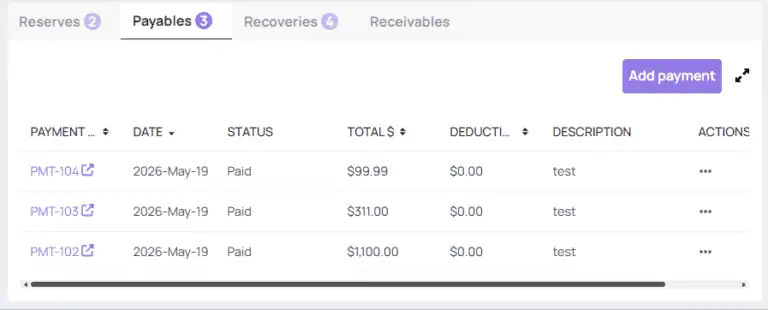
When a claim is processed in Modular and a payment needs to be made to a supplier or claimant, the payable is created in Modular, the correct payee details are linked or created in Business Central, and the payable invoice is sent through to Business Central. The finance team then completes accounting and payment processing in their normal Business Central workflows. The result is less manual re-entry, fewer errors, stronger traceability for reconciliation and audits, and faster finance processing overall.
Key Features & Benefits of the Integration
The key features of integration between Modular Solutions and Microsoft Dynamics 365 Business Central are:
Eliminates duplicate data entry and rekeying between Modular and Business Central
2Eliminates reconciliation gaps between policy administration and accounting systems
3Improves financial accuracy, auditability, and speed of financial close
4Prevents duplicate downstream finance creation by maintaining cross-system reference mappings
5Improved accuracy in reporting with cleaner data
6Supports scalable financial operations while maintaining compliance and governance standards
7Improved operational efficiency, with automated creation of payee/contact records and payable invoices in Business Central reducing administrative overhead
8Improved control over outgoing payments, with payables flowing into Business Central for finance teams to review, approve, and process
9Better experience for suppliers and claimants, with payable invoices reaching finance faster and less friction between policy operations and finance processes
10Fits cleanly into the wider Microsoft ecosystem alongside tools like Outlook, Excel, Teams, and Power BI
Frequently Asked Questions About Microsoft Dynamic 365 Business Central Integration with Modular Solutions
What is Microsoft Dynamics 365 Business Central?
Microsoft Dynamics 365 Business Central is an all-in-one cloud-based business management solution designed primarily for small and mid-sized organizations. It brings finance, sales, service, and operations together in a single platform and integrates natively with Microsoft tools like Outlook, Excel, Teams, and Power BI.
How does the integration between Microsoft Dynamics 365 Business and the Modular Solutions policy administration system work?
The integration uses a secure, event-driven API connection to pass accounts payable records — including claims-related and premium-related payable invoices — from Modular into Business Central, along with the matching payee details. Reference links between the two systems keep records traceable for reconciliation and audit, while finance teams complete payment processing in their normal Business Central workflows.
Why should insurance companies integrate their policy administration system with their accounting software?
Integration streamlines finance workflows, reduces manual re-entry and errors, and gives finance teams a traceable path from policy and claims activity in Modular to accounting records in Business Central. That means less administrative overhead, cleaner reconciliation, and faster handling of supplier and claimant payments.
Is the integration between Modular Solutions and Microsoft Dynamics 365 secure?
Yes. The API uses authentication, encryption, and controlled access, and the integration is scoped to only the data it needs — raw payment credentials and unrelated policy configuration data are explicitly not accessed. Cross-system reference mappings and audit-friendly logging support reconciliation and traceability.
Does the integration support automated premium and claims posting?
The integration focuses on accounts payable. When a payable is generated in Modular — for example, a claim payment to a supplier or claimant, or a premium-related payable — the integration creates or links the payee record in Business Central and passes the payable invoice across. Finance teams then complete accounting and payment processing in Business Central using their normal workflows. The integration is a targeted finance bridge for AP, not a full sync of all Modular data into Business Central.
How does this integration improve compliance?
The integration produces a clean trail of payable records moving from Modular into Business Central, with reference links between the two systems for reconciliation and audit support. That makes it easier for insurers, MGAs, and brokerages to evidence how operational transactions in Modular correspond to accounting records in Business Central.
Want to learn more?
Contact us with your questions or to book a demo.
Learn More About the Business Central Integration